 PupShift
Dog sitter handoff sheet: what to tell your sitter
In short
Give the sitter one sheet with real times, food amounts set by your vet or the label, walk habits, quirks, house info and emergency contacts, then do one routine together before you leave.
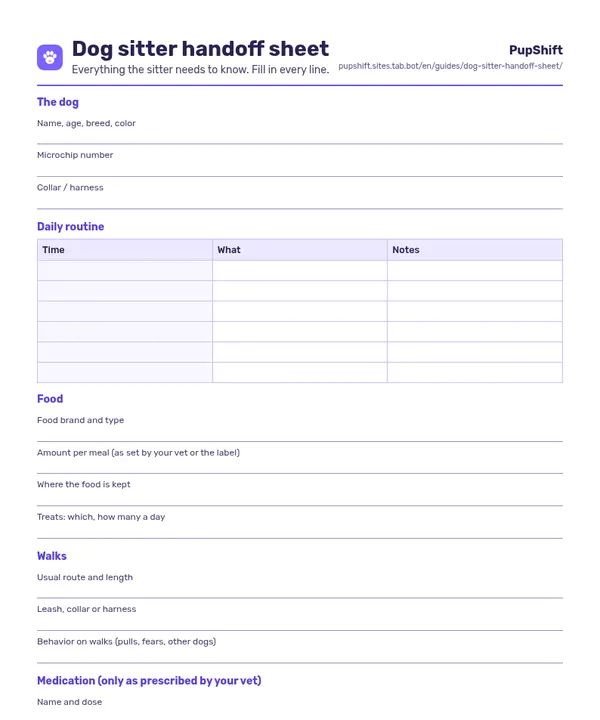 PDF · A4Dog sitter handoff sheetDownload PDF
Give your sitter one sheet: the dog's routine with times, food and amounts, walk habits, quirks, house info, the vet and two emergency contacts. Then spend 15 minutes walking through it together before you leave. Anything the sitter would otherwise text you about belongs on that sheet.
Why a sheet works better than a quick chat at the door
Most handoffs happen five minutes before the taxi comes. "She eats twice a day, the leash is somewhere by the shoes, call if anything." Then the sitter spends the week guessing how much "a scoop" is, whether she pulls toward other dogs, and which neighbor has the spare key.
The ASPCA's checklist for leaving pets with a sitter covers the same things every time: how to reach you, your itinerary, trusted emergency contacts, your dog's details and medications, the vet and the nearest emergency clinic, the daily routine, and what to do if something goes wrong. Write it down once and reuse it for every trip.
What goes on the handoff sheet
The dog. Name, age, breed, color, microchip number, and a recent photo on the sitter's phone, in case the dog gets out.
Daily routine with times. Real times, not "morning". For Pepper:
| Time | What | Notes |
|---|---|---|
| 7:00 | Breakfast | Bowl in the laundry room, wait for her to sit |
| 7:30 | Walk, 30 minutes | The park loop, not the main road |
| 13:00 | Short walk, 10 minutes | Just around the block |
| 18:30 | Dinner | Same bowl, same amount |
| 21:30 | Last trip out | Front yard is fine |
Food and amounts. Which food, how much per meal, and where it's kept. Use the amount your vet or the label gave you, written so it can't be misread ("one red cup, level", not "a scoop"). The AKC suggests labeling food containers, especially with more than one pet, and noting any feeding order.
Treats. Which ones, how many a day, and where they are.
Walks and leash habits. Usual route, how long, harness or collar, and how your dog really behaves: pulls at cats, scared of scooters, rolls in anything dead. Say whether the dog stays on leash at all times. The AKC notes that a secure yard and a leash help prevent escapes.
Quirks. Hides under the bed during thunder. Hates being picked up. Barks at the delivery guy and then stops. A sitter who wasn't told will worry about these at 11 PM.
Medication. Only what your vet prescribed, copied exactly from the label: name, dose, time, how to give it, and where it's kept out of the dog's reach. The ASPCA suggests going over medication with the sitter in person. Don't ask the sitter to change anything on their own.
House info. Keys and a spare (the AKC suggests leaving a spare with a neighbor in case a keypad fails), alarm code, Wi-Fi, which doors stay closed, and where the cleaning supplies are for accidents.
Vet and emergency contacts. Your vet's name, phone and address, the nearest emergency clinic, and one or two people who know your dog and can make decisions if you can't be reached.
How to reach you. Your phone, travel dates, where you're staying, and when you'll be hard to reach (a flight, a wedding).
What to log. Meals, walks, any meds given, anything unusual.
Fill in the handoff sheet
Do it a few days before the trip. Fill in every line of the printable on this page and give the sitter a copy and a photo of it.
Set out food, meds and supplies
Leave food for the whole trip plus a little extra, and put the leash, poop bags and bowls where the sitter can find them and the dog can't. Keep medication in a container the dog can't open, and check you have enough doses.
Tell your vet and a backup person
Both the ASPCA and the AKC recommend calling your vet's office to say who's looking after your dog and who can make decisions while you're away. Then give your backup contact the dates and the sitter's number.
Do a walkthrough together
Have the sitter come over before the trip and do one real routine with you: a meal, a short walk on the usual route, where everything is. Let them hold the leash and see how your dog takes to them. It saves a lot of messages later.
Agree on updates while you're away
Decide how often you want news and how, say a message after each walk or one photo every evening. Be clear about what means "call me now" (the dog won't eat, gets out, seems unwell) and what can wait. If you'll be out of reach, the backup contact is the first call.
Common mistakes
- "Feed her normally." The sitter doesn't know your normal. Write amounts and times.
- No spare key. Keypads run out of battery.
- No vet permission. A sitter at the clinic who isn't allowed to decide anything is stuck.
- Too many updates, or none. Agree on one rhythm.
Where PupShift fits
PupShift lets you send an outside helper link to your dog walker or sitter. They log meals and walks on the family board, so you can see that Pepper was fed while you're away, but they can't change or delete anything and don't see the family album. You choose when their access ends.
This is general information, not a substitute for advice from a vet or trainer. If something seems wrong with your dog, call your vet.
Sources
- Pet Sitter Safety: What to Know Before You Go ASPCA
- How to Prep Your House for a Pet Sitter American Kennel Club
Checked on the update date.
This is general information, not advice from a vet, trainer or other professional.