 PupShift
Kids' dog chores by age: a family responsibility chart
In short
Give each child one or two jobs that fit their age, teach dog-safety rules first, keep a visible chart and praise often. Adults keep the vet, medication, food decisions and supervision.
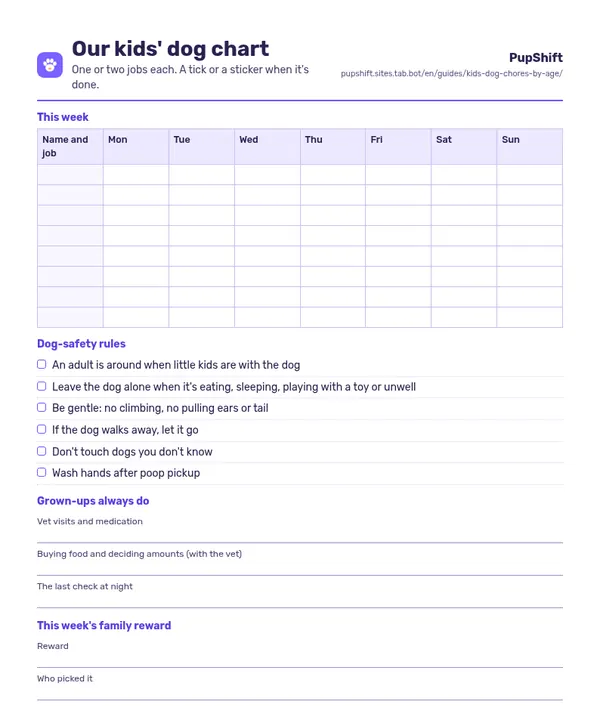 PDF · A4Our kids' dog chartDownload PDF
Kids can really help with the dog from about age 3, if the job fits their age and an adult stays in charge. Little ones can fill the water bowl and tidy toys, school-age kids can own a meal, and tweens and teens can take on most daily care. The vet, medication, buying food and supervision stay with adults.
Teach the safety rules first
Before anyone gets a job, everyone learns how to behave around the dog. The RSPCA explains that kids hug, kiss, shriek and run, and a dog can find all of that threatening. Its family rules make a good list for the fridge:
- An adult stays with young children around dogs. The RSPCA's first rule is never to leave a child alone in a room with a dog, even your own.
- Leave the dog alone when it's eating or has a treat, playing with a favorite toy, sleeping, or unwell, hurt or tired.
- Be gentle. No climbing on the dog or pulling ears or tail.
- If the dog walks away or looks unhappy, let it go to its quiet spot.
- Don't go up to dogs you don't know, like in the park.
The AKC's article on children and dogs puts it simply: kids should always be supervised with pets.
Pick jobs that fit each age
The AKC's guidance gives a rough ladder. Preschoolers, with supervision, can scoop food, refill water, brush gently with a soft brush and put toys away. From about 5 to 9, kids can become the main person who feeds the dog and wipes up around the bowls. From about 10, most kids can handle daily care like feeding, play, exercise, potty duty and grooming. The same article says a 3-year-old probably isn't ready to help walk the dog.
As a chart, with the ages shifted to fit school years:
| Age | Jobs they can own | With an adult |
|---|---|---|
| 3 to 5 | Put the water bowl down, tidy toys, gentle brushing | Always next to them |
| 6 to 8 | Fill the water bowl, scoop a pre-measured meal, wipe up spills, help on walks | Adult holds the leash or walks alongside |
| 9 to 12 | Own one daily meal, short walks where you live if the dog is easy to handle, poop pickup with hand-washing, simple tricks | Adult checks the meal was logged |
| Teens | Most daily care, regular walks, brushing, keeping the log | Adult reviews weekly |
Walks depend on the dog as much as the child. A strong dog that pulls is an adult job at any age. And poop pickup always ends with washing hands, which the AKC points out too.
In our example family, Ari (7) fills Pepper's water every morning and puts her toys in the basket before bed. Noa (11) does breakfast on school days and the after-school walk around the block, since Pepper walks calmly. Mom and Dad do dinner, the evening walk, the vet and anything with medication.
Make the chart visible
Put the chart where the job happens, on the fridge by the food or by the door next to the leash. One row per child, one column per day, and a tick or sticker when it's done. Younger kids do better with pictures (a bowl, a leash, a brush) than words.
Start with one or two jobs per child. Add another once the first has gone a couple of weeks without reminders.
Praise often and reward the week
Praise right after the job, and be specific: "You filled Pepper's water before breakfast without being asked." At the end of the week, look at the chart together. A small family reward for a full week works better than paying per job. Some families let the kid with the most ticks pick the weekend movie or Friday's dessert.
When a job gets missed, fix it calmly and move on. The AKC specifically warns against threatening to give the dog away when a child forgets. It scares kids, and empty threats teach them your words don't mean much.
Keep the adult jobs with adults
The AKC is honest about it: whatever a child promised before the dog arrived, the adults end up responsible. Some jobs stay with adults however capable the kids are:
- Vet visits, vaccines and anything health-related.
- Medication, always, exactly as your vet prescribed.
- Buying food and deciding how much the dog eats, with your vet.
- Supervising young children with the dog.
- The last check at night: did the dog eat, drink and go out?
House-training a puppy takes more consistency than most kids can manage, so let them help, but keep an adult in charge.
Common mistakes
- Handing a 6-year-old the leash of a big, strong dog. Match walks to the dog.
- Too many jobs at once. Start with one.
- No check that the job happened. Without ticks on the chart, nobody knows if Pepper ate.
- Using the dog as a punishment. Keep the dog out of consequences.
Where PupShift fits
Kids can join the family board and tap Fed or Walked themselves, so everyone sees who did what. There's also a weekly cup with a prize the family picks, like "Owns the TV remote all weekend", which tends to keep kids interested.
This is general information, not a substitute for advice from a vet or trainer. If something seems wrong with your dog, call your vet.
Sources
- How to Know if Your Child Is Ready for a Dog American Kennel Club
- Dogs and children RSPCA
- How Having a Dog Helps Your Child's Development American Kennel Club
Checked on the update date.
This is general information, not advice from a vet, trainer or other professional.